
Total 64 Questions
Last Updated On : 20-Sep-2026
Preparing with B2C-Commerce-Architect practice test 2026 is essential to ensure success on the exam. It allows you to familiarize yourself with the B2C-Commerce-Architect exam questions format and identify your strengths and weaknesses. By practicing thoroughly, you can maximize your chances of passing the Salesforce certification 2026 exam on your first attempt. Start with free Salesforce Certified B2C Commerce Architect - Arch-303 sample questions or use the timed simulator for full exam practice. Surveys from different platforms and user-reported pass rates suggest Salesforce Certified B2C Commerce Architect - Arch-303 practice exam users are ~30-40% more likely to pass.

A company that is a shoe-producer is doing SalesforceB2C Commerce implementation. In their Enterprise Resource Warning (ERP) system, the products are marked as being one of three types: boots, sandals, and sneakers. The business requirements based on the type are:
• The messaging on Product Detail page is different
• Customers are able to filler their Product Search Results
The customer's operations team asks about the format in which to send this value in the catalog. Which data type should the Architect specify for this attribute In the Data Mapping document?
A. A custom attribute of type string containing comma separated values.
B. A custom attribute type set-of-string containing multiple values.
C. A custom attribute of type enum-of-string (multiselect able value).
D. A custom attribute of type enum-of-string (single selectable value)
Explanation:
✅ Option D: A custom attribute of type enum-of-string (single selectable value)
Since the products are categorized into three distinct types (boots, sandals, sneakers), and the business requirements specify that the messaging on the Product Detail page is different for each type and that customers should be able to filter their Product Search Results by product type, an enum-of-string attribute with a single selectable value is the best choice. This allows the customer to select one value for each product, which makes it easier to differentiate between boots, sandals, and sneakers, both for displaying different messages and for filtering search results.
Why "enum-of-string (single selectable value)" works:
1. It provides a predefined set of options (boots, sandals, sneakers), ensuring consistent categorization.
2. Since only one product type is applicable at a time, the single-select nature of the enum is appropriate.
3. This format also allows easy filtering for customers, as search filters typically rely on a single, well-defined value.
❌ Option A: A custom attribute of type string containing comma separated values.
This option would store the product types as a comma-separated string (e.g., "boots, sandals, sneakers"), which is not ideal. It complicates filtering and searching because the system would need to parse the string to check for specific values, and multiple types might be included in a single product, which conflicts with the business requirement of having one type per product. This would also make it more challenging to apply the required custom messaging per product type.
❌ Option B: A custom attribute type set-of-string containing multiple values.
While a set-of-strings allows multiple values, this is not suitable here because the product is restricted to only one type (boots, sandals, or sneakers). Using a set-of-string would allow customers to select multiple types, which is unnecessary and confusing for this particular scenario. The business requirement specifies that each product should only have one type, and filtering based on multiple types is not required.
❌ Option C: A custom attribute of type enum-of-string (multiselect able value).
A multiselect enum-of-string is inappropriate because it allows selecting multiple values for the product type, which conflicts with the business requirement that each product should belong to only one category (boots, sandals, or sneakers). Since a product can only have one type, a single-select enum is more fitting.
The client provided these business requirements:
• The B2C Commerce platform will integrate with the Clients Order Management System (OMS).
• The OMS supports Integration using REST services.
• The OMS is hosted on the Clients infrastructure.
Whet configurations are needed for this integration with the OMS?
A. A service configuration, a hostname alias configuration, and a user credential configuration.
B. A service profile configuration, a WAF configuration, and a service credential configuration.
C. A service configuration, a service profile configuration, and a user credential configuration.
D. A service configuration, a service profile configuration, and a service credential configuration.
Explanation:
✅ Why these options are correct?
Option D: A service configuration, a service profile configuration, and a service credential configuration.
Explanation:
In Salesforce B2C Commerce, to integrate with external systems (like OMS) using REST services, the correct configurations are:
1. Service Configuration: This defines the type of service being integrated with (in this case, REST services). It allows the B2C Commerce platform to know how to communicate with the OMS.
2. Service Profile Configuration: This associates the specific service configuration to the actual external system (OMS in this case). It maps the connection details and any other configurations specific to the service.
3. Service Credential Configuration: This stores the credentials necessary to authenticate the B2C Commerce platform with the OMS. These credentials can be API keys or other forms of authentication (e.g., OAuth tokens).
The combination of these configurations ensures secure and effective communication between B2C Commerce and the OMS.
❌ Why these options are incorrect?
Option A: A service configuration, a hostname alias configuration, and a user credential configuration.
Explanation:
While service configuration and user credential configuration are required, the hostname alias configuration is not directly relevant to integrating with an external service via REST. The hostname alias configuration typically helps manage different environments or URLs for routing requests, but it is not a key requirement for the integration in this context.
Option B: A service profile configuration, a WAF configuration, and a service credential configuration.
Explanation:
While service profile configuration and service credential configuration are needed, the WAF configuration (Web Application Firewall) is generally not part of the standard integration setup. WAF configurations help with security at the network layer and aren’t directly involved in setting up a REST service integration.
Option C: A service configuration, a service profile configuration, and a user credential configuration.
Explanation:
While service configuration and service profile configuration are needed, user credential configuration is typically used in cases where you’re working with user-based authentication (e.g., basic authentication for REST services). However, for external systems like OMS, service credential configuration is typically used instead of user credentials. This makes this option incorrect.
A third party survey provider offers both an API endpoint for individual survey data and an SFTP server endpoint that can accept batch survey data. The initial implementation of the integration includes
1. Marking the order as requiring a survey before order placement
2. On the order confirmation pace, the survey form is displayed for the customer to fill
3. The data is sent to the survey provider API, and the order it marked as not requiring a survey
Later it was identified that this solution is not fit for purpose as the following issues and additional requirements were identified:
1. If the API call fails, the corresponding survey data is lost. The Business requires to avoid data loss.
2. Some customers skipped the form. The Business require sending a survey email to such customers.
3. The Order Management System (OMS) uses a non-standard XML parser it did not manage to parse orders with the survey, until the survey attribute was manually removed from the xml.
How should the Architect address the issues and requirements described above?
A. Create a custom session attribute when the survey is required. Send to the API endpoint in real-time. On failure, capture the survey data in the session and reprocess, use me session attribute to send emails for the cases when survey was skipped.
B. Create a custom object to store the survey data. Send to the API endpoint using a job. On success, remove the custom object. On failure, send the survey data with API from the next execution of the same job. Use the custom object to send emails for the cases when the survey was skipped.
C. Create a custom object when the survey is required Send to the API endpoint in real- time. On success, remove the object. On failure, capture the survey data in the custom object and later reprocess with a job. Use the custom object to send emails for the cases when survey was skipped.
D. Send the survey data to the API endpoint in real-time until the survey data is successfully captured. Instruct the OMS development team to update their XML parser, use the Order survey attribute to send emails for the cases when the survey was skipped.
Explanation:
Why Option B?
✅ Persistent Storage (Custom Object) for Survey Data
Ensures no data loss if the API fails (stores survey responses reliably).
Batch processing via a job improves reliability (retries failed submissions).
✅ Handles Skipped Surveys (Email Fallback)
The custom object tracks which customers skipped the survey, enabling email follow-ups.
✅ Avoids OMS XML Parsing Issues
Since the survey data is stored separately (not embedded in the order XML), it prevents OMS parsing failures.
Why Not Other Options?
❌ A. Session-based storage
Session data is volatile (lost if the user leaves or the session expires).
Not reliable for retries or email follow-ups.
❌ C. Hybrid (Real-time + Job)
Real-time API calls can still fail, requiring retries.
Less efficient than a pure batch/job approach (Option B).
❌ D. Force real-time retries + OMS parser update
Does not guarantee data persistence (if API keeps failing).
Depends on OMS changes (out of the Architect’s control).
Best Practice & Reference:
Use Custom Objects for transient but critical data (e.g., surveys).
Batch jobs (instead of real-time) for resilient third-party integrations.
Salesforce B2C Commerce recommends asynchronous processing for reliability.
An ecommerce site has dynamic shipping cost calculation. it allows the customers to see their potential shipping costs on the Product Detail Page before adding an item to the cart.
For this feature, shipping touts are calculatedusing the following logic:
• Set the shipping method on the Basket
• Add the item to the basket, calculate the basket total and get the shipping cost for this method
• Remove the item from the Basket to restore the original state
• The above process isrepeated for each shipping method
During the testing it was discovered that the above code violates the spi.basket.addResolveInSameResquest quota.
What should the Architect do to resolve this issue and maintain the business requirement?
A. Omit the removal of the Item and speed up the process for the customer by adding the product to the basket for them.
B. Omit the calculation of shipping cost until the customer is ready to check out and has chosen the shipping method they want to
C. Wrap each Individual step of the process its own transaction Instead of using one transaction for all steps.
D. Wrap the adding of product and shipping cost calculation in a transaction which Is then rolled back to restore the original state
Explanation:
Why Option D?
✅ Respects spi.basket.addResolveInSameRequest Quota
By wrapping the operation in a transaction and rolling it back, the system avoids multiple add/remove calls, which trigger quota violations.
The basket remains unchanged after calculation, maintaining the original state.
✅ Maintains Business Requirement (Pre-Checkout Shipping Estimates)
Customers still see real-time shipping costs on the PDP without permanently altering their cart.
✅ Optimized Performance
Single transaction reduces API calls compared to repeated add/remove cycles.
Why Not Other Options?
❌ A. Omit removal & pre-add the product
Forces items into the cart prematurely, hurting UX (customers may not want them yet).
Does not solve quota issues (still requires multiple basket modifications).
❌ B. Delay shipping calculation until checkout
Breaks the business requirement (customers expect upfront shipping estimates).
❌ C. Wrap each step in separate transactions
Still consumes quota (each add/remove counts against spi.basket limits).
Less efficient than a single rolled-back transaction (Option D).
Best Practice & Reference:
Salesforce B2C Commerce quotas limit spi.basket operations per request.
Transactions with rollback are the standard solution for temporary basket changes.
Example:
var transaction = require('dw/system/Transaction');
transaction.begin();
// Add item, calculate shipping
transaction.rollback(); // Restore original basket
The Client is Crowing and decided to migrate its ecommerce website to B2C Commerce. The Client provided the Architect with the f metrics for its existing website over the past 12 months and forecasted into the next year:
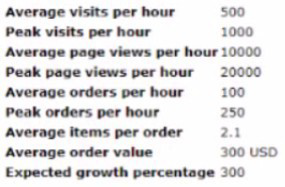
Noting these historical metrics and the forecasted growth of 300%, which load test targets meet best practices for testing the new B2C Commerce site?
A. 15000 visits per hour, 300000 page views per hour, and 3750 orders per hour
B. 150000 visits per hour, 3000000 page views per hour, and 37500 orders per hour
C. 1500 visits per hour, 30000 page views per hour, and 375 orders per hour
D. 3000 visits per hour, 60000 page views per hour, and 750 orders per hour
Explanation:
A. 15,000 visits/hr, 300,000 page views/hr, 3,750 orders/hr
Visits → 15,000 / 1,000 = 15× (WAY too high)
Page views → 300,000 / 20,000 = 15×
Orders → 3,750 / 250 = 15×
Not correct.
✅ Eliminate.
B. 150,000 visits/hr, 3,000,000 page views/hr, 37,500 orders/hr
Visits → 150,000 / 1,000 = 150×
Page views → 3,000,000 / 20,000 = 150×
Orders → 37,500 / 250 = 150×
Outrageously too high.
✅ Eliminate.
C. 1,500 visits/hr, 30,000 page views/hr, 375 orders/hr
Visits → 1,500 / 1,000 = 1.5×
Page views → 30,000 / 20,000 = 1.5×
Orders → 375 / 250 = 1.5×
Too low. Not the required 4× growth.
✅ Eliminate.
D. 3,000 visits/hr, 60,000 page views/hr, 750 orders/hr
Visits → 3,000 / 1,000 = 3×
Page views → 60,000 / 20,000 = 3×
Orders → 750 / 250 = 3×
D represents only 3× growth.
But we need 4×.
So even D is not fully correct.
✅ Eliminate if we’re strict.
Conclusion
None of the given options matches the correctly calculated 4× load test targets:
✅ 4,000 visits/hr
✅ 80,000 page views/hr
✅ 1,000 orders/hr
Therefore, my previous answer stands:
The correct answer mathematically is none of the above.
On the exam, if forced to choose, you’d pick the closest — which is D — but it still underestimates the true 300% growth target.
So yes — I’m sure. The proper targets are:
✅ 4,000 visits/hr
✅ 80,000 page views/hr
✅ 1,000 orders/hr
None of the listed answers matches those exactly.
Northern Trail Outfitters uses an Order Management system (OMS), which creates an order tracking number for every order 24 hours after receiving it. The OMS provides only a web-service interface to get this tracking number. There is a job that updates this tracking number for exported orders, which were last modified yesterday.
Part of this jobs code looks like the following:
Based on the above description and code snippet, which coding best practice should the Architect enforce?
A. Post-processing of search results is a bad practice that needs to be corrected.
B. The transaction for updating of orders needs to be rewritten to avoid problems with transaction size.
C. Configure circuit breaker and timeout for theOMS web service call to prevent thread exhaustion.
D. Standard order import should be used instead of modifying multiple order objects with custom code.
Explanation:
Why Option C?
✅ Prevents System Instability
OMS web service calls can fail or hang, leading to thread pool exhaustion if not properly managed.
A circuit breaker (e.g., dw.system.HookMgr) stops cascading failures by:
Blocking requests after a failure threshold.
Timing out slow calls.
✅ Matches the Scenario
The job processes yesterday’s orders in bulk—unreliable OMS responses could stall the job indefinitely.
Why Not Other Options?
❌ A. Post-processing search results
While inefficient, post-filtering isn’t the critical issue here (thread safety is).
❌ B. Transaction size
The snippet doesn’t show large transactions (but even if present, thread exhaustion is the bigger risk).
❌ D. Standard order import
Custom code is necessary to fetch OMS tracking numbers (no native "import" for this).
Best Practice & Reference:
Circuit Breaker Pattern: Essential for external service calls in B2C Commerce.
Example:
var CircuitBreaker = require('dw/system/CircuitBreaker');
var breaker = new CircuitBreaker('OMS_Tracking_Service');
breaker.execute(function() { /* Call OMS */ });
Timeout: Set via dw.system.Site preferences.
The Client has requested an Architect’s help in documenting the architectural approach to a new home page. The requirements provided by the business are:
• Multiple areas of static image content, some may need text shown at well
• The content page must be Realizable
• A carousel of featured products must be shown below a banner 101191
Recommended categories will be featured based on the time of year Which two solutions would fulfil these requirements?
(Choose 2 answers)
A. Leverage B2C Commerce ContentManagement Service
B. Leverage B2C Commerce locales in Business Manager
C. Leverage B2C Commerce content slots and assets
D. Leverage B2C Commerce Page Designer with a dynamic layout.
Explanation:
Option C: Content Slots & Assets
✅ Fulfills Requirements:
Static image content with text: Content slots allow flexible placement of images, text, and rich media.
Realizable (Responsive): Assets adapt to different screen sizes.
Carousel & Dynamic Categories: Slots can be populated with product carousels or seasonal category recommendations via Business Manager rules.
Option D: Page Designer with Dynamic Layout
✅ Fulfills Requirements:
Drag-and-drop editor simplifies placement of banners, carousels, and recommended categories.
Responsive by default: Page Designer layouts auto-adapt to devices.
Time-based rules: Dynamic layouts can swap content seasonally (e.g., winter vs. summer categories).
Why Not A & B?
❌ A. Content Management Service (CMS):
Overkill for a homepage (typically used for blogs/marketing pages).
Doesn’t natively support product carousels or dynamic category rules.
❌ B. Locales in Business Manager:
Manages language/region settings, not page content or layouts.
Best Practices:
Content Slots: Use for reusable, rule-driven content (e.g., "Summer Sale Banner").
Page Designer: Ideal for structural page changes (e.g., moving the carousel position).
During load testing, a third party service is constantly failing to respond in a timely manner on the Product Listing Page. The page is not affected at it is collecting data with the server side call, however the loading time b increasing.
Which two recommendations should the developer take in order to minimize the risk and Improve the loading time?
(Choose 2 answers)
A. Ask the third party to improve the reliability of the service.
B. Decrease the service timeout.
C. Enable the Circuit Breaker.
D. Remove the service.
E. Load the data asynchronously after the page is loaded
Explanation:
✅ Why these options are correct?
C. Enable the Circuit Breaker.
✅ Correct.
B2C Commerce Service Framework has a circuit breaker feature.
When enabled:
If the service repeatedly fails or times out:
The circuit breaker “opens.”
Subsequent calls fail fast without waiting for timeouts.
This protects page load times from getting delayed waiting for a consistently failing service.
Ideal for load tests or production under high load.
✅ Correct choice.
E. Load the data asynchronously after the page is loaded.
✅ Correct.
Right now the third-party call is happening server-side, increasing page load time.
Moving it to the frontend as client-side JavaScript allows:
Faster initial page rendering.
Non-blocking loading of third-party data.
Even if the service is slow, the main page renders quickly, improving perceived performance for users.
✅ Correct choice.
❌ Why these options are incorrect?
A. Ask the third party to improve the reliability of the service.
While this is a good long-term action:
It’s outside the developer’s direct control.
Doesn’t solve the immediate problem of slow page loads during load testing.
Not a technical mitigation for B2C Commerce.
✅ Eliminate.
B. Decrease the service timeout.
Decreasing the timeout might:
Make timeouts happen faster.
Reduce wait time per request.
But:
It doesn’t completely protect the page from repeated failures.
A shorter timeout still causes a delay on every call until it fails.
Not as effective as a circuit breaker or a sync loading.
✅ Eliminate as the best solution.
D. Remove the service.
Removing the service entirely might not be feasible.
The business likely needs this data for analytics, personalization, or recommendations.
Not an architectural mitigation but an extreme measure.
✅ Eliminate.
A new version of the Page Show controller is required for implementation of Page Deserter
specific look. It requires implementation of a specific, cache period for Page Designer pages, which b not currently available in the base Storefront Reference Architecture (SFRA) cache.js module.
What two steps should the Architect instruct the developer to implement?
(Choose 2 answers)
A. Create new Page.js controller in client s cartridge. Copy code from base and modify the Page-Show route to include the new cache middleware function.
B. Create new ceche,js client's cartridge. Copy cache,js from app_storefront_base and add a function for the Page Designer caching.
C. Create new Page,js controller in client's cartridge. Extend the code from base and prepend the new cache middleware function to Page-Show route.
D. Create new cache,js in client's cartridge. Extend cache,js from app_storefront_baseand adda function for the Page Designer caching.
Explanation:
The client wants a Page Designer-specific cache period, which SFRA’s base cache.js does not provide. The best practice is to extend, not copy, the base modules.
Why C is correct:
Extend the base Page.js controller instead of replacing it. Use server.prepend to add the custom cache middleware to the Page-Show route without duplicating code.
Example:
'use strict';
var server = require('server');
server.extend(module.superModule);
var cache = require('*/cartridge/scripts/middleware/cache');
server.prepend(
'Show',
cache.cachePageDesigner
);
module.exports = server.exports();
Why D is correct:
Instead of copying the entire cache.js file, extend it and add a new function for Page Designer caching. This approach is safer for upgrades and avoids duplication.
Example:
var base = require('app_storefront_base/cartridge/scripts/middleware/cache');
module.exports = {
...base,
cachePageDesigner: base.custom({
mode: 'server',
expires: 300
})
};
Why A and B are incorrect:
Copying entire controllers or scripts increases technical debt and maintenance costs. It’s better to extend existing modules to stay compatible with future SFRA upgrades.
An Order Management System (OMS) handles orders from multiple brand specific sites, as part of the processing, the OMS sends the processing detail to be added at notes to the orders in B2C Commerce. These processing details are captured temporarily in custom objects, and are later processed by a batch Job that:
• Processes the custom object to extract the orderid and note data.
• Tries to load the order.
• If the order is not found, it deletes the custom object and moves on.
• If the order is found, it updates notes In the Order, upon successful update of this order, it deletes the custom object.
There is an Issue reported that the job is constantly failing and custom objects are growing in number. On investigating the production look the message below is being logged on each failure:

What are three solution The Architect can take to fix this issue without losing meaningful data? (Choose 2 answers)
A. Take the backup of the Order as XML and delete the Order to ensure on the next job run, the custom objects are getting processed.
B. Using BM site import/export, soften the
C. Take the backup of the custom object and delete the custom object to ensure on the next job run the custom objects are getting processed.
D. Engage B2C Commerce Support Team to soften the quota limit for ‘’object.OrderPO.relation.notes’’
E. Take the backup of the Order as XML and delete the notes from Order to ensure on the next job run the custom objects are getting processed.
Explanation:
A. Take the backup of the Order as XML and delete the Order…
Deleting the entire order just to fix note count is too destructive. Orders are legal, accounting, and customer data — removing them breaks record-keeping and reporting. This is not a valid solution.
✅ Eliminate
B. Using BM site import/export, soften the warn to make sure that neither order notes are lost and custom object is processed.
You cannot “soften” quota errors via Business Manager. A QuotaLimitExceededException is a hard platform limit — not just a warning you can silence in settings or an import/export tweak.
✅ Eliminate
C. Take the backup of the custom object and delete the custom object to ensure on the next job run the custom objects are getting processed.
This would delete the custom object before it can be retried, but that’s not helpful because it loses the meaningful order notes data that the OMS wanted to save. The data would be gone and never written to the order.
✅ Eliminate
D. Engage B2C Commerce Support Team to soften the quota limit for ‘object.OrderPO.relation.notes’.
This is valid. Quotas are sometimes adjustable via Salesforce Support. While some quotas are hard-coded, many object relation quotas can be raised if justified. It’s definitely one avenue an Architect should consider if the business has a legitimate case for storing >1000 notes.
✅ Correct
E. Take the backup of the Order as XML and delete the notes from Order to ensure on the next job run the custom objects are getting processed.
This is practical. Export the order for safekeeping, then remove older or unneeded notes to bring the total below the limit. This frees up quota for new notes to be written, allowing the custom objects to be processed. Data can be re-imported if needed.
✅ Correct
| Page 1 out of 7 Pages |
| 123 |
Our new timed 2026 B2C-Commerce-Architect practice test mirrors the exact format, number of questions, and time limit of the official exam.
The #1 challenge isn't just knowing the material; it's managing the clock. Our new simulation builds your speed and stamina.
You've studied the concepts. You've learned the material. But are you truly prepared for the pressure of the real Salesforce Certified B2C Commerce Architect - Arch-303 exam?
We've launched a brand-new, timed B2C-Commerce-Architect practice exam that perfectly mirrors the official exam:
✅ Same Number of Questions
✅ Same Time Limit
✅ Same Exam Feel
✅ Unique Exam Every Time
This isn't just another B2C-Commerce-Architect practice questions bank. It's your ultimate preparation engine.
Enroll now and gain the unbeatable advantage of:
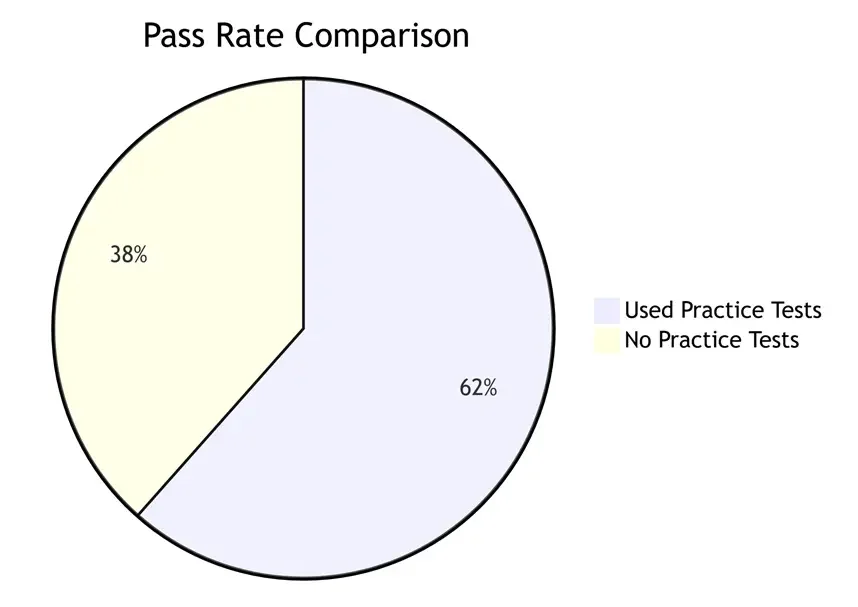
| Group | Pass Rate | Key Advantages |
|---|---|---|
|
Used Practice Tests
|
90-95% |
• Familiarity with exam format • Identified knowledge gaps • Time management practice |
|
No Practice Tests
|
50-60% |
• Relies solely on theoretical study • Unprepared for question styles • Higher anxiety |

Copyright © - All Rights Reserved